Plant It and Watch Them Come
At the beginning of each new year, I reflect on the people or ideas from the year gone by that have left a lasting impression. In 2025 the undisputed grand prize goes to three people. First and foremost is Dr. Doug Tallamy, an entomologist and cofounder of Homegrown National Park, an organization that, according its mission, “raises awareness and urgently inspires everyone to address the biodiversity crisis by adding native plants and removing invasive ones where we live, work, learn, pray, and play.”
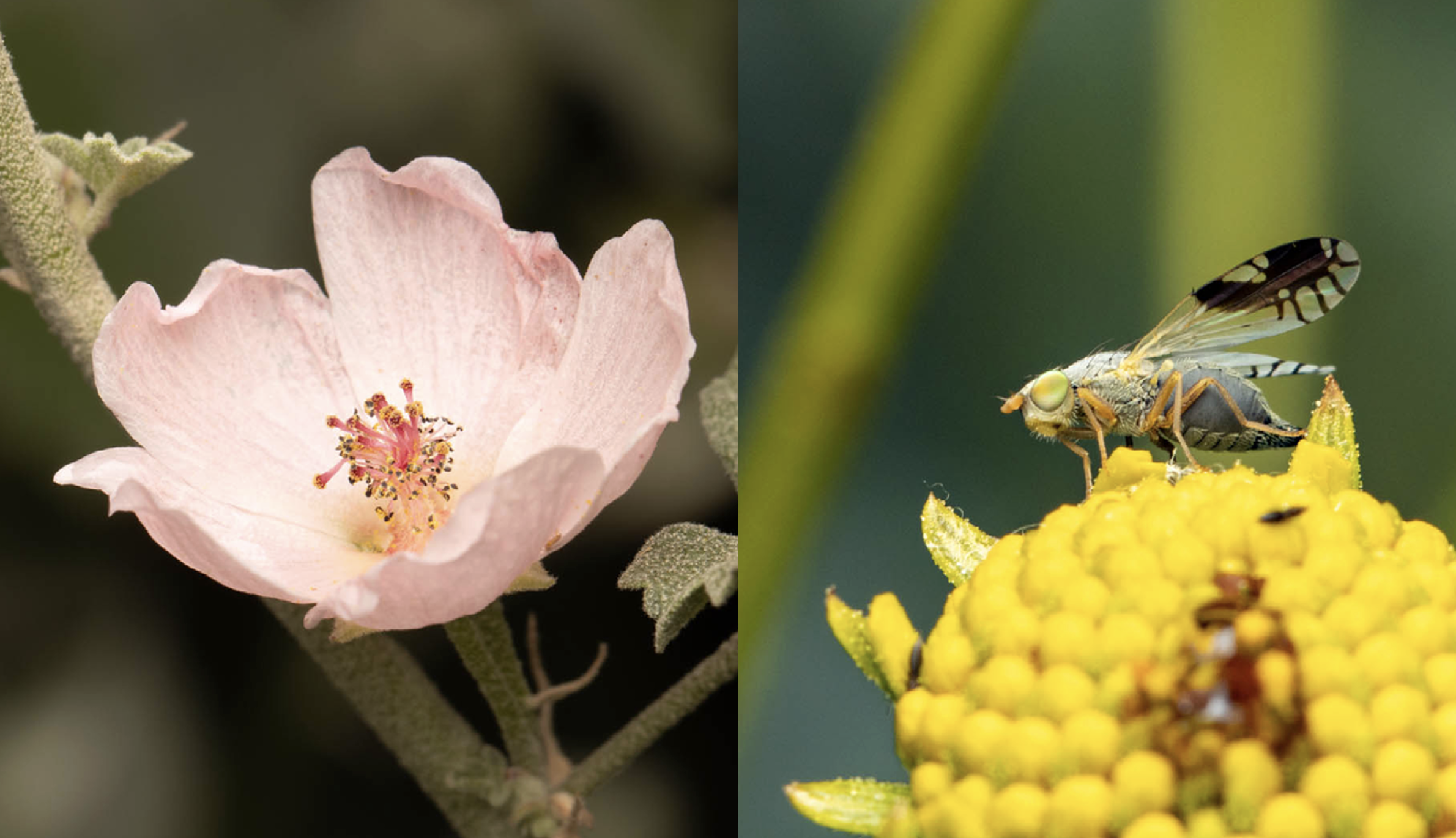
Apricot Globe-Mallow (Sphaeralcea ambigua), 2023 (left); A fruit fly (Trupanea nigricornis) lands on a brittlebush (Encelia farinosa), 2024 (right)
The idea of planting native species that are exquisitely adapted to the communities and conditions in which they evolved is, of course, nothing new. Planting them to scale in human-dominated environments on the order of our national parks, however, is a mind-bender. Tallamy charges that the future of biodiversity in the U.S. cannot be entrusted to our national parks and other public lands alone. Though critical, these units are too small and too isolated “to sustain the species that run the ecosystems that we all depend on,” he says. Instead, Tallamy directs our attention to the wide array of ecologically impoverished landscapes in our midst that could be restored to collectively support the needs of an enormous number of more-than-human species. Think national park-sized environments composed of connected tracts of railroad and powerline rights of way, say, or golf courses, cemeteries and the vast numbers of individual backyards in our cities and suburbs. What if we didn’t think of nature as places “out there” that we visit from time to time but as the places “in here” where we live, work, learn, pray and play? What if we carried out our day-to-day lives embedded in ecologically rich environments that are collectively of our own making? What would that look like?
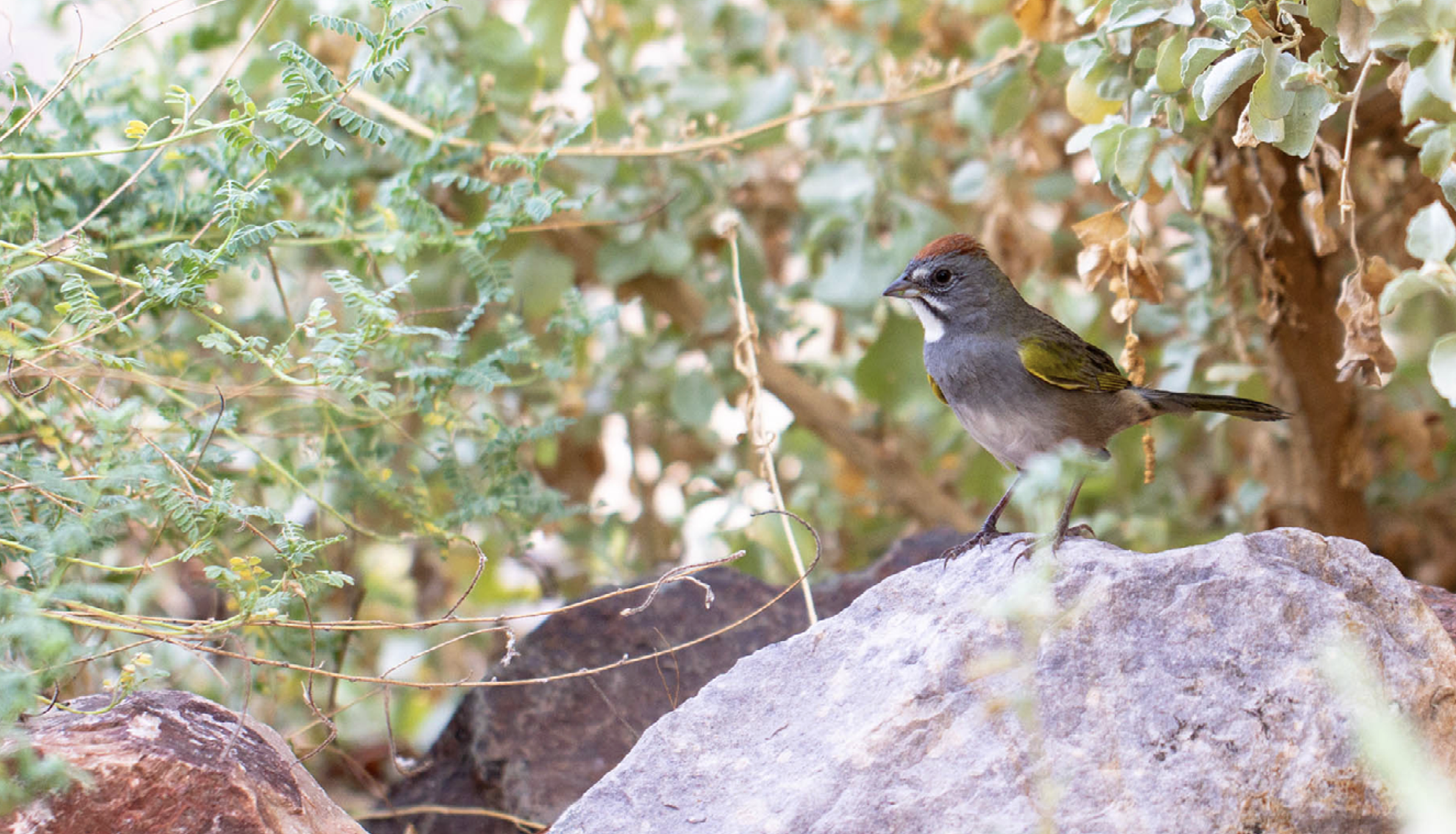
Green-tailed Towhee (Pipilo chlorurus), 2020
For starters, it might look a lot like the home ground of two biologist friends of mine. For years, as Laura Steger and Rick Overson traveled the country in pursuit of professional opportunities, they dreamed about cultivating a place of extraordinary ecological diversity on their doorstep. In 2017 they got their chance after buying a house in Tempe, Arizona, and turning its threadbare yard into such a convincing facsimile of wild desert that hundreds (and still counting) of both resident and visiting species now rely on this refuge for feeding and breeding, nesting and resting.
Read about their remarkable story in the Winter 2025 issue of Zygote Quarterly.